
Charging an electric car at home in Spain: what it costs and when to do it
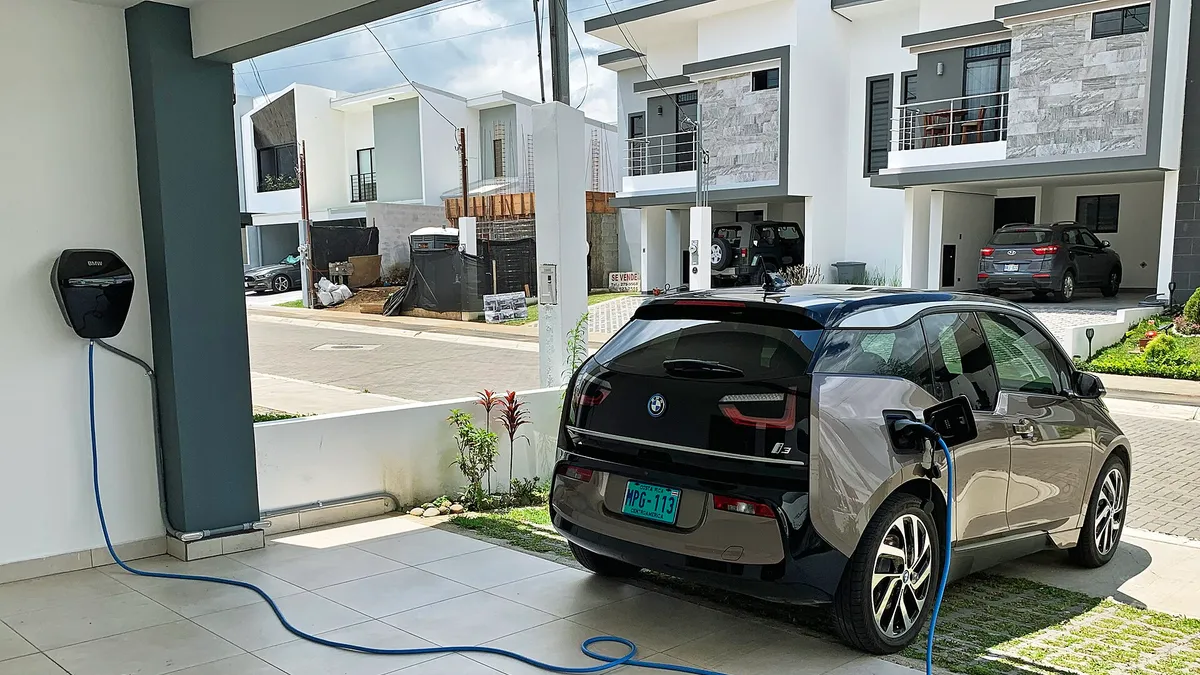
Charging your electric car at home is by far the cheapest way to drive electric in Spain. On the PVPC tariff the price also changes every hour, so picking the right time can halve the cost of each charge. Here is how to work it out and plan your charging.
How much energy an electric car uses
A typical electric car uses 14 to 20 kWh per 100 km, depending on the model, speed and temperature. It uses more in winter and on motorways, and less in town and in mild weather.
On top of that come charging losses: some energy is lost as heat in the charger and the battery. Allow about 10% more than the car’s own figure.
What each charge costs
The sum is simple:
kWh charged × price per kWh = cost of the charge
For example, to drive 100 km in a car that uses 17 kWh/100 km, you charge about 19 kWh including losses:
| Price per kWh (energy term) | Cost of 100 km |
|---|---|
| €0.08 (overnight or sunny midday) | €1.52 |
| €0.13 (typical average) | €2.47 |
| €0.25 (pricey evening) | €4.75 |
The electricity tax and VAT come on top, but the gap between hours stays the same. A petrol car using 6 litres per 100 km at €1.50 a litre costs about €9 for the same distance.
Our electric car charging calculator lets you enter the charging hours and see straight away what it would cost to start now or at the cheapest hour.
When to charge
On the PVPC, the cheap hours are usually:
- Overnight, from midnight to 8 am, which is also the off-peak period (P3) of the 2.0TD tariff, with the lowest tolls.
- Weekends and national holidays, which are off-peak all day.
- Midday on sunny days, when lots of solar power pushes the wholesale price down.
The easiest option is to schedule charging in the car or the charger so it starts after midnight. To fine-tune it, check tomorrow’s electricity prices each evening: REE publishes them around 8:15 pm, so you can choose the exact hours. Our time bands page shows the 2.0TD periods.
Charger, socket and power
There are three common ways to charge at home:
| How you charge | Power | To charge 40 kWh |
|---|---|---|
| Ordinary socket (schuko) | about 2.3 kW | about 17 hours |
| Single-phase wallbox at 16 A | 3.7 kW | about 11 hours |
| Single-phase wallbox at 32 A | 7.4 kW | about 5.5 hours |
An ordinary socket is fine for emergencies or small top-ups, but it is not designed to run at full power for many hours. For daily use, a wallbox fitted by an authorised installer on its own circuit, with its own protection, is the safe choice.
Off-peak power is almost free
The 2.0TD tariff lets you contract two different power levels: one for peak and standard hours (P1) and one for off-peak (P2), midnight to 8 am and weekends.
Off-peak power costs very little: in 2026 the tolls and charges for P2 add up to about €0.73 per kW per year, compared with almost €28 per kW for P1. So you can raise only the off-peak power to charge the car at night and barely notice it on the bill. For example:
- P1: 4.6 kW, what you need during the day.
- P2: 9.2 kW, so the car charges at 7.4 kW while the house keeps running.
We explain this in detail in how much power to contract. Bear in mind that if you charge outside off-peak hours with a low P1, the meter’s limiter may cut the supply.
Tips to pay less
- Charge little and often: you do not need to fill the battery every night. For daily use, most manufacturers recommend keeping it between 20% and 80%.
- Schedule charging in the cheapest hours instead of plugging in when you get home, which is usually the priciest time of day.
- Make the most of weekends, which are off-peak all day.
- If you have solar panels, charge at midday with your own energy.
Summary
Charging at home overnight, 100 km in an electric car usually costs €1.50 to €3 in energy, several times less than petrol. Schedule charging in off-peak hours, raise only your P2 power if you need it, and check tomorrow’s prices each evening to pick the best time.