
How to save on electric heating in Spain with hourly electricity prices
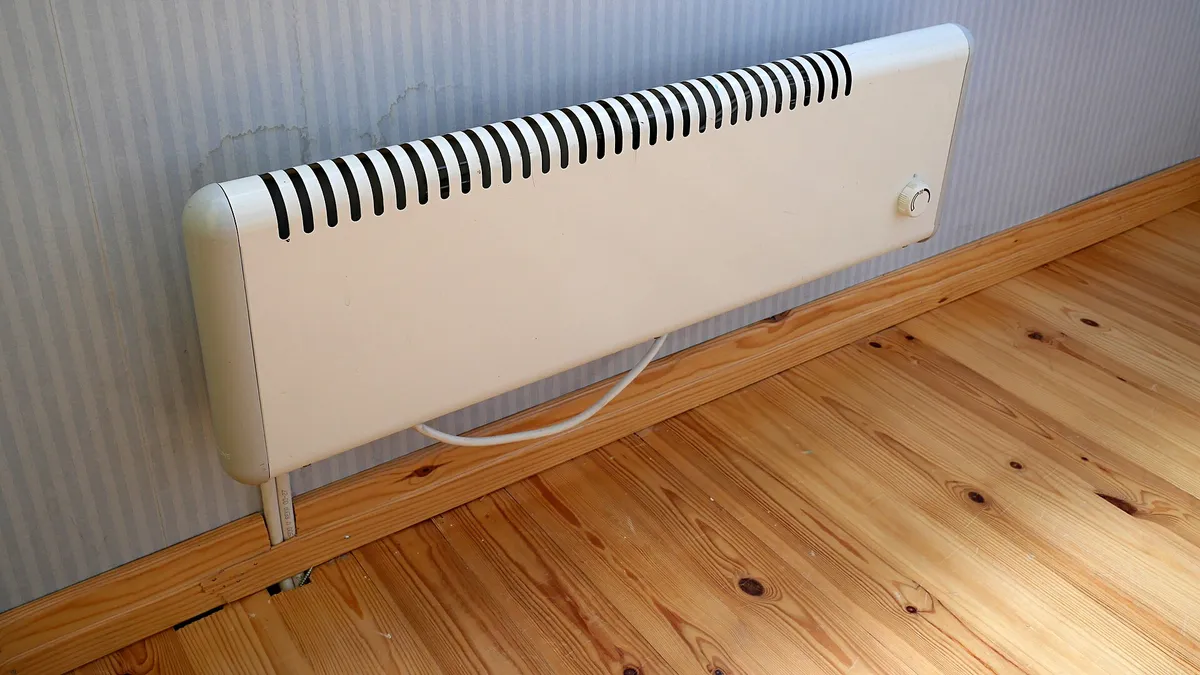
If you want to save on electric heating in Spain, you have three levers: the device you heat with, the temperature you set and, if you are on the PVPC, the time of day you switch it on. In many homes heating is the biggest winter load, and it tends to fall right in the most expensive hours of the day, the early evening. Here is what it really costs, with real prices from November 2026, and what you can do to pay less.
Which electric heating uses least
What matters is how much heat you get for each kWh you pay for:
| System | Heat per kWh of electricity |
|---|---|
| Oil-filled radiator, convector, fan heater, panel heater | 1 kWh |
| Storage heater | 1 kWh, but it can charge during cheap hours |
| Heat pump (air-conditioning split unit or air-to-water system) | Between 2 and 4 kWh |
Every resistance heater turns electricity into heat at practically 100%. A 1,500 W radiator sold as “low consumption” uses exactly the same as any other 1,500 W device switched on for the same time. What differs between models is how they spread the heat and how precisely their thermostat works, which decides how many hours they actually run.
A heat pump doesn’t make heat: it takes it from the outside air and moves it indoors. According to IDAE, Spain’s Institute for Energy Diversification and Saving, it transfers between 2 and 4 kWh of heat for every kWh of electricity. It performs worse the colder it is outside, and some units fall back on backup resistance heaters in that case. Even so, if you already have a reversible split air conditioner in the living room, heating with it costs several times less than with a radiator. If your remote has a heat mode, usually marked with a sun, your “air con” is a heat pump.
What an evening of heating costs on the PVPC
Here is an example using the real PVPC energy price for Monday 16 November 2026 in mainland Spain. Say your living room needs 6 kWh of heat to stay comfortable for four hours, roughly what a 2,000 W radiator gives running three quarters of the time:
| Hours | Average price per kWh | Radiator (6 kWh) | Heat pump (2 kWh) |
|---|---|---|---|
| 18:00–22:00 | €0.339 | €2.03 | €0.68 |
| 14:00–16:00 | €0.132 | €0.79 | €0.26 |
| 02:00–06:00 | €0.112 | €0.67 | €0.22 |
For the heat pump we assume 3 kWh of heat per kWh, the middle of IDAE’s range. Electricity tax and VAT come on top of these amounts.
That day, the same heat cost two and a half to three times more between 6 pm and 10 pm than in the early afternoon or the small hours, and with the heat pump it cost a third of what it did with the radiator. Put the two together and the gap between the worst and the best option is almost tenfold.
It wasn’t an unusual day. Last winter, from November 2025 to February 2026, the most expensive hour on working days fell between 18:00 and 22:00 on 83 of 85 days, according to our price history. The cheapest hour fell in the small hours on 64 of those days and between 12:00 and 15:00 on the other 20.
Heat up before the expensive hours
A home doesn’t go cold all at once: walls, floors and furniture hold heat for a while. That lets you bring part of your heating forward into the cheap hours and ease off in the expensive ones:
- Programme the thermostat to go up a degree or two in the cheap afternoon hours and drop to a more moderate setting between 18:00 and 22:00, rather than the other way round.
- At dusk, lower the blinds and draw the curtains so that heat doesn’t escape through the windows.
- If you are out in the afternoon, set the heating to come on in the cheap hour before you get back, not at the time you walk in.
In the example above, moving 2 of the radiator’s 6 kWh from the evening to 14:00–16:00 saves about €0.41 that day. Some of that heat is lost before you use it, and more is lost the worse the insulation, so the real saving will be a little lower. In a draughty flat it barely pays; in a well-insulated one it does.
Storage heaters: when they pay off on the PVPC
A storage heater uses resistance elements to heat a refractory core and releases that heat hours later. IDAE points out that it does not save energy: one kWh still gives one kWh of heat, just like a radiator. Its advantage is purely about price: you buy the energy in cheap hours and use it in expensive ones.
On the PVPC it can work out, with two caveats:
- The cheap hours are not always overnight. Storage heaters were designed for the old night tariff and usually charge at night. But on Thursday 12 November 2026, for example, energy cost about €0.17 per kWh from 02:00 to 06:00 and only €0.04 from 14:00 to 16:00. If yours has a timer, check tomorrow’s electricity prices each evening and set it to the hours that really are cheapest.
- They are hard to control. A static storage heater gives off heat whether you are home or not, and IDAE warns that few are easy to adjust. Charge too much and you pay for heat that is wasted. Fan-assisted (dynamic) models give you more control over when the heat comes out.
Watch your contracted power
A radiator or fan heater draws about 2 kW while it heats. If two radiators, the water heater and the washing machine all come on in the same cheap hour, you can go over your contracted power and the meter will cut the supply. Stagger appliances by a few minutes or consider raising your power a little: how much power to contract explains how to work it out and what each kW costs.
Quick checklist
IDAE’s recommendations in its Guía práctica de la energía (practical energy guide):
- 19 to 21 °C is enough for most people during the day, and 15 to 17 °C in bedrooms at night.
- Each extra degree adds around 7% to consumption.
- A programmable thermostat saves between 8% and 13% of energy.
- If you go out for a few hours, turn the thermostat down to about 15 °C rather than leaving it as it is.
- To air a room, opening the windows for about 10 minutes is enough.
- Close blinds and curtains at night.
Hourly prices only affect the PVPC energy term. If you are on a fixed-price free-market tariff, the time you switch the heating on doesn’t change what you pay per kWh, but the device and the temperature still do.
Summary
To spend less on electric heating, a heat pump is the most efficient option, giving 2 to 4 kWh of heat for every kWh of electricity. Keep the house at 19 to 21 °C, bring part of the heating forward into cheap hours and avoid running radiators between 18:00 and 22:00 on working days, which is almost always the priciest slot. To see what a heater costs depending on when you switch it on, use HoraLuz’s electric heater cost calculator.