
How to read your electricity bill in Spain, line by line
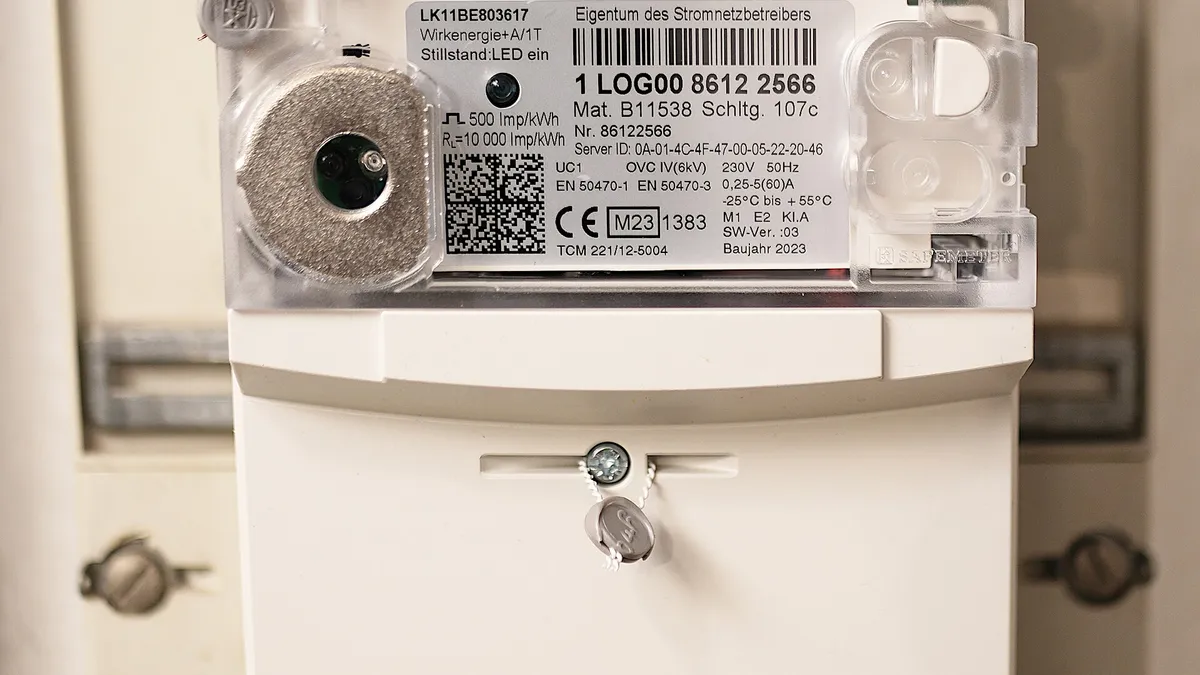
Learning how to read your electricity bill in Spain is the quickest way to see where the money goes and which parts you can actually change. A PVPC bill always has the same items in the same order: first what you pay for power and for energy, then taxes and the meter. Below we go through them one by one and build an example bill with real prices.
Before the figures: your contract details
On the first page, or in a separate box, you will find the details worth checking at least once:
- Supplier and type of contract: if it says PVPC or precio voluntario para el pequeño consumidor, you are on the regulated tariff and your energy is billed hour by hour. If not, you are on a free-market deal.
- Access tariff: almost every home is on 2.0TD, the tariff for up to 15 kW.
- CUPS: the code that identifies your supply point. You need it to switch supplier or to look up your consumption on your distributor’s website.
- Contracted power: two figures in kW, one for the peak/standard period (P1) and one for off-peak (P2).
- Billing period and type of reading: if the reading is estimated (estimada) rather than actual (real), that bill’s consumption is an approximation and will be adjusted later.
- Distributor (distribuidora): the company that owns the grid and handles faults, even though you pay the supplier.
Bills also carry a QR code that opens the CNMC’s “Entiende tu factura” tool, which explains your contract using your own data and lets you compare it with other offers. It is in Spanish, but it is the regulator’s own breakdown of your bill.
How to read your electricity bill, line by line
1. Power term (término de potencia)
This is the fixed part: you pay it even if you use nothing. It works out as contracted kW × days in the period × price per kW per day, once for P1 and once for P2.
In 2026 the tolls and charges in the 2.0TD power term add up to €27.704413 per kW per year in P1 and €0.725423 per kW per year in P2 (CNMC resolution of 18 December 2025 and Order TED/1524/2025, as listed by the Ministry for the Ecological Transition). The PVPC also adds some fixed supply costs, so the price per kW on your bill is a little higher. Almost all the weight is in P1: contracting more power for off-peak hours costs very little.
2. Energy term (término de energía)
This is what you pay for the kWh you used. On the PVPC each hour has its own price, and your smart meter records how much you use in each one. Depending on the supplier, it appears as a single line or split into tolls and charges on one side and the cost of energy on the other; many bills also break your consumption down into peak, standard and off-peak.
It is the only item that depends on when you use electricity, and it is exactly the price published every day for 2.0TD.
3. Bono social funding
A small amount every customer pays to fund the discount for vulnerable households. If you receive the bono social yourself, you will also see a line with your discount.
4. Electricity tax (impuesto sobre la electricidad)
It is charged on the power and energy terms combined. The standard rate is 5.11269632%, and under the Excise Duties Act it can never be less than €1 per MWh consumed. In 2026 the government has cut it to 0.5% in some months because of the energy crisis; for November 2026, the Tax Agency lists the standard rate.
5. Meter rental (alquiler del contador)
If the meter belongs to the distributor, as in most homes, you pay rent for it. For a domestic smart meter, the regulated price is €0.81 a month (Order ITC/3860/2007), prorated by day. It is not subject to the electricity tax, but it does pay VAT.
6. VAT (IVA)
It is added last, on everything above including the electricity tax. The standard rate is 21%. During 2026 there have been months with VAT cut to 10% for homes with up to 10 kW and for bono social recipients, and Royal Decree-law 25/2026 leaves that cut open for November and December 2026 only if the electricity CPI rises sharply year on year. The safest thing is to check the percentage printed on your bill. The Canary Islands have no VAT but IGIC instead, and Ceuta and Melilla apply IPSI.
Worked example: a 30-day PVPC bill
A home in mainland Spain with 4.6 kW contracted in P1 and P2 that uses 250 kWh in 30 days. For energy we use €0.199/kWh, the average of every PVPC hour in October 2026 (€199.2/MWh); your actual price depends on when you use electricity.
| Item | Calculation | Amount |
|---|---|---|
| Power term | €10.74 tolls and charges + supply costs (rounded) | €12.00 |
| Energy term | 250 kWh × €0.199/kWh | €49.75 |
| Electricity tax | 5.11269632% of €61.75 | €3.16 |
| Meter rental | €0.81/month, 30 days | €0.80 |
| VAT | 21% of €65.71 | €13.80 |
| Total | €79.51 |
Two useful takeaways:
- Energy is just over 60% of this bill. The rest is fixed costs and taxes that do not change whatever time you use electricity.
- Taxes multiply your savings: every €0.01/kWh you knock off your average price over 250 kWh is €2.50 before tax and about €3.18 on the final bill.
Did you pay a high or a low price for your energy?
Your bill has everything you need to check this in three steps:
- Add up the energy term amounts (including the energy tolls and charges if they are listed separately).
- Divide by the kWh billed. The result is your real average price in €/kWh.
- Compare it with the average PVPC price over the same months, which you can find in the price history.
If your average is clearly above the market average, much of your consumption falls in the pricey hours, usually 6 pm to 10 pm on working days. If it is below, you are already making good use of the cheap hours. To see which hours are off-peak at any moment, check the time bands.
Which parts of the bill can you change?
- When you use electricity: it only affects the energy term, but on the PVPC that is where the room for saving is. Check each hour’s price on HoraLuz and set the washing machine, dishwasher or water heater to run in the cheapest ones.
- How much energy you use: using less lowers the energy term and, with it, the electricity tax and VAT.
- Contracted power: if you have more than you need, lowering it cuts the fixed term on every bill. Look at P1 above all.
- The bono social: if you qualify, it is a direct discount. You need to be on the PVPC.
- What you cannot change: the electricity tax rate, VAT and the regulated meter rental.
The hourly price published by Red Eléctrica is only the PVPC energy term. On a free-market tariff your prices are the ones in your contract, although the bill is laid out the same way.
If you are still unsure what the PVPC is and why its price changes every hour, start with this guide.