
Standby power: how much electricity devices use when "off" and how to cut it
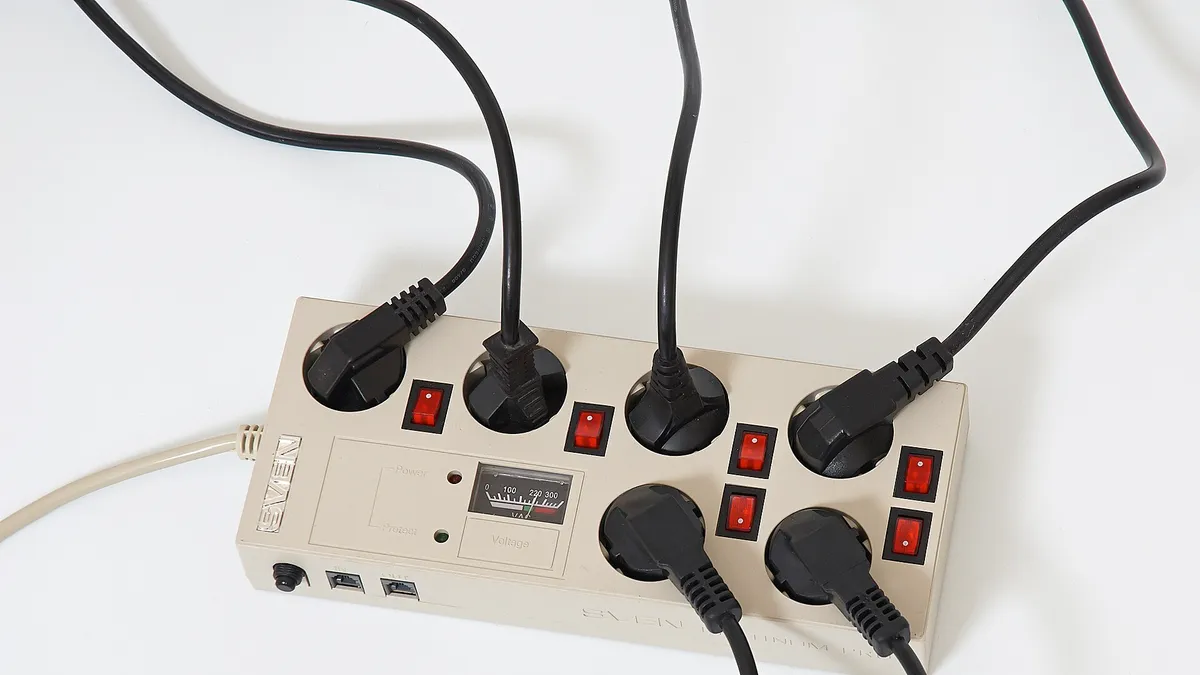
Even when you are not using anything, your home keeps using electricity: the router, the TV on standby, the microwave clock, chargers left plugged in… This is standby power, also called phantom load (consumo fantasma in Spanish). Each device uses little, but added together over the 8,760 hours of a year they can make up a noticeable part of your bill.
Base load and phantom load
It helps to separate two things:
- Base load: everything your home uses continuously, including in the middle of the night. It includes devices that must stay on, such as the fridge, the freezer or the router.
- Phantom load: the part of the base load that does nothing useful while you are not using the device: the TV’s standby, the games console, the stereo, set-top boxes, chargers with no phone attached…
You can’t switch off the fridge, but you can almost always trim the phantom load.
How much devices use on standby
Typical continuous power:
| Device | Standby or continuous power |
|---|---|
| Fibre router | 6–12 W (always on) |
| Modern TV on standby | 0.5–1 W |
| Older TV or one with “quick start” | 5–20 W |
| TV set-top box | 5–15 W |
| Games console in rest mode with downloads | 5–15 W |
| Stereo or soundbar | 1–10 W |
| Microwave or oven with a clock | 1–3 W |
| Desktop computer switched off but plugged in | 1–5 W |
| Smart speaker | 2–4 W |
| Charger plugged in with nothing attached | under 0.5 W |
EU ecodesign rules have required for years that the simple standby mode of new appliances use no more than about 0.5 W. Network-connected devices (smart TVs, consoles, set-top boxes) have higher limits, and older models can use much more.
What it costs a year
The sum is: watts × 8,760 hours ÷ 1,000 = kWh a year.
- 1 W running all the time is about 8.8 kWh a year.
- 10 W is about 88 kWh a year.
- 30 W of phantom load, a common figure in a home with several devices, is about 263 kWh a year.
At a final price of around €0.18–0.22 per kWh including taxes, those 30 W cost €47 to €58 a year, just for devices waiting around. And because standby is continuous, you pay for it at every hour, including the expensive ones.
How to measure your home’s base load
You don’t need to go device by device to get an idea:
- Check your hourly data. Your distribution company keeps your consumption for every hour, and you can see it on its website or on the Datadis platform using your ID and the CUPS code on your bill.
- Look at the small hours (3 am to 5 am), when nobody is using anything. That consumption, in kWh per hour, is your base load. For example, 0.08 kWh in one hour equals 80 W running continuously.
- Subtract what the fridge uses (on average about 25–40 W for a modern fridge-freezer, even though it cycles on and off) and the router. What is left is mostly phantom load.
To measure a specific device, a plug-in power meter (an adapter with a display) is cheap and shows the exact watts.
How to reduce it
- Switched power strips for the TV area (TV, set-top box, console, soundbar) and the computer. Switch everything off at once when you are done.
- Timer or smart plugs for devices you don’t need at night, such as the set-top box or the stereo.
- Turn off “quick start” or “instant on” on TVs and consoles: it takes a few seconds longer to switch on, but standby use drops a lot.
- Unplug chargers you aren’t using and appliances you only use a few times a year.
- When replacing an old appliance, check its standby consumption on the spec sheet.
- If your fridge is more than 15 years old, it may use twice as much as a new one: it is the continuous load that weighs most.
Base load and the PVPC
On the PVPC, most of what you use can be moved to cheap hours: washing machine, dishwasher, water heater or car. Base load can’t: you pay for it at every hour, including the priciest evening ones. That is why cutting it has a double effect. For everything else, check tomorrow’s electricity prices and schedule big appliances for the cheapest hours. There are more ideas in how to save on your electricity bill.
Summary
Phantom load is just a few watts per device, but added up over a whole year it can cost €40–60 or more. Check your night-time consumption on Datadis to see how much your home uses doing nothing, and cut it with switched power strips, timer plugs and by turning off quick-start modes.